Inflation has been a huge topic within the United States since the COVID-19 pandemic and rightfully so, as more and more Americans are struggling to afford the basic amenities of shelter, food, and medical resources. As an educated individual who is employed with a half way decent job, my struggle to obtain simple life accomplishments fall closer on the spectrum of far fetched dreams rather than a reality.
Ideas that were once advertised to me as a small child like gaining higher education, obtaining a single-family home, and starting a family are goals that are no longer achievable in the United States no matter how hard you work at your job or the number of years you put into a single profession.
With this new post Covid-19 reality, I have found my thoughts wondering things like will I need a second job to be able to afford groceries? How can I move out of being a low-income individual? What are the things that I need to start cutting out of my life to make ends meet?
With this mentality in mind, I have made it a goal this year to really cut out what isn’t important and just be more mindful of the things that I am investing in to increase my odds of being able to achieve simple life accomplishments and to give back to the communities that need it.
- Paper Towels
Some people may argue that paper towels are a necessity for the cleanliness of a home, but it is not a necessity in order to live. Although it can make cleaning up things more convenient, it is extremely wasteful and often not even sustainability made. The NRDC, National Resource Defense Council, came out with an extensive report called, The Issue with the Tissue: How Americans are Flushing Forest Down the Toilet, in February 2019 highlighting the lack of accountability that is being held by large corporations of what is left of our natural resources. This report later led to the movement Charmin Kills Forests and the Documentary, Charmin Wipes Out a Forest, which is linked below:
Although paper towels where invented as a means of increasing hygiene and limit the spread of sickness, Capitalism has taken the once simple idea and marketed solutions for problems that Americans never had, while simultaneously obliterating what little natural resources we have left. Although I understand the original idea behind the creation of the product, we live in a day and age that we were we have have so many other more affordable and sustainable ways that not only help our pockets, but our environment.
The Group of the East End has an extremely informative online resource called, Fix Our Earth: Eco-Friendly Paper Towel Alternatives, that encompasses numerous other resources that can better help households make that transition to more mindful buying. Although ten dollars a week to your groceries for paper towels might not seem like a lot, if you multiple that by the fifty-two weeks have a year, you get almost half of a grand that you just use one time and put in the trash can. Additionally, taking sales away from unethical multi-million corporations might encourage them to change the way they mass produce their products.
2. New Apparel
Putting a disclaimer in the beginning of this point is mandatory because there are always going to be special cases like starting a new job or being in a wedding where purchasing new clothing is unavoidable, but those cases can be justified as long as they are far and few in between with logical reasoning behind them. Those specific cases are also not where your attention should be drawn to. When stating “new apparel,” I am speaking specifically about those store runs where you are just going to look what is out there out of boredom, but do not necessary have a specific reasoning behind your purchase.
Although fashion helps provide identity to individuals, often times the new apparel we purchase is not justified other than how it makes us feel in the moment when we obtain it. It could be because we like the feeling of walking around the mall with multiple bags in our hands or that rush of dopamine we get when popping off the tag for the first time. Wherever you are on the spectrum, I think we can all agree there is some type of kick out of it that can be hard to explain.
Although it can be challenging to fight this exhilarating feeling, it is critical to start this conversation on the comparison between wants and needs. Although new clothing is a privilege within the United States, a large majority of us already have a number of clothes that we haven’t worn in years or even worse, with tags still on them. This has become the new normal for Americans, but doesn’t need to be.
In Eduardo Gabriel Jara Porras, Psychological Effects of Consumerism on Society: High fashion clothing brands based as a factor, he concludes that high fashion clothing brands utilize unethical market strategies to hone in on ideologies around personal value and self worth to get individualisms to buy in to whatever article of clothing corporations are attempting to push out which leads society to withstand social pressures that not only impact individuals pass their pockets, but mentally and environmentally.
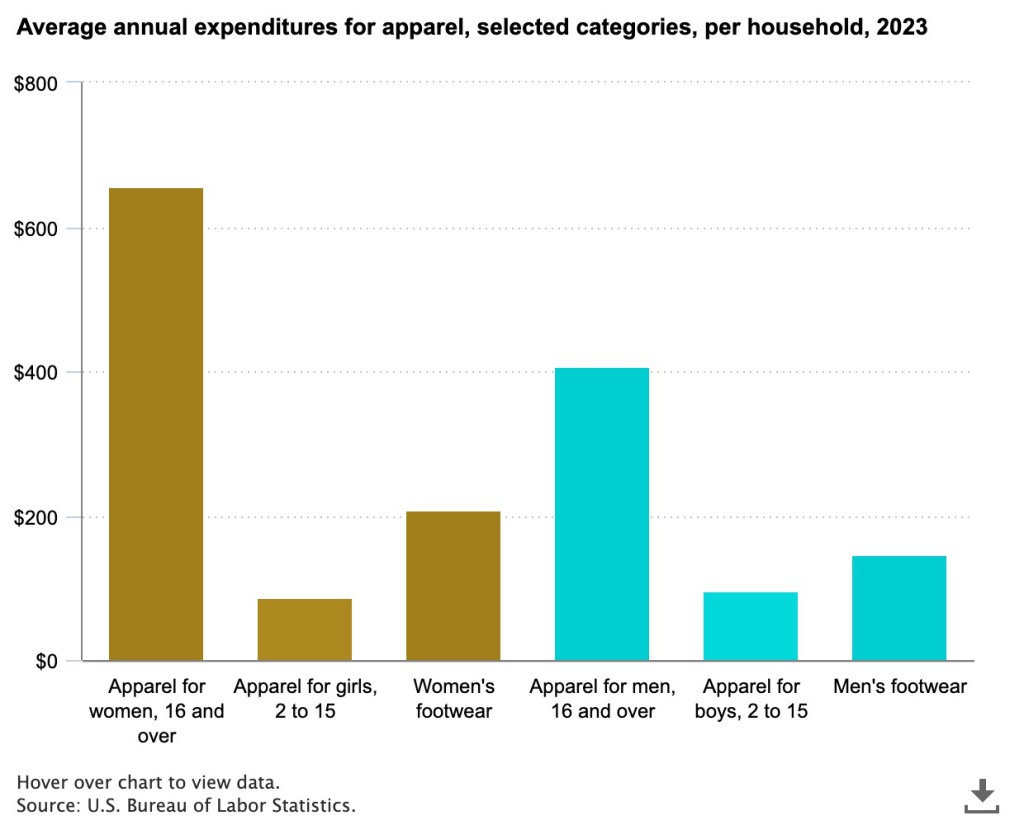
According to the U.S. Bureau of Labor Statics, the average American can spend anywhere from eighty-seven dollars to six hundred and fifty five dollars a year on a range of apparel. Cutting that unnecessary expense can help lead families to saving thousands of dollars a year, while breaking down the toxic fashion standard that our society continues to uphold.
3. Single Use Plastic Water Bottles
In an blog post called, Microplastics Worry Us, But We Still Drink Bottled Water, by Rick Lingle clearly highlights a reason why I am refusing to purchase single use plastic water bottles that goes past the finances.
In an April 2024 report from the World Wildlife Foundation, called Rising Tides III: Citizens Around the World Demand Strong Rules To End Plastic Pollution, they found that 85% of people want global ban on single-use plastics. In the United States alone, according to a February 2022 report from Oceana Plastic Pollution survey, 83% of Americans are either very concerned or somewhat concerned about plastic pollution and its impact on the environment and our oceans.
What do these stats have to do with my refusal of my single use plastic water bottles? Well although the data might state the public’s concerns of single use plastic, the lack of implication of these concerns is what ultimately leads me to the negligence of purchasing a 24 pack of water wrapped in plastic, not just once, but twice. Although most Americans are exposed to the issues of single use plastic, we continue to fund the problem weekly.
In a news article from Case Western Reserve University, they predict that the average Americans spend $5 a week on water bottles or $260 per year. Although not a large number to some Americans, it is important to stress that this unnecessary spending as many of us have resources to free drinking water through public water fountains.
In a survey conducted by Ever Vessel, they found that an average 85% of Americans own and use a reusable water bottle. In fact, their survey concluded that many individuals owned more than one reusable water bottle. From the data, it is clear that American not only have access to reusable water bottles, but also access to public water yet we continue to fund the microplastic and environmental concerns that we have.
Although it might not seem like it, the small financial decisions we make on the day to day bases, really do add up over a life-time and can even inspire others to start thinking deeper about their purchases past the standard of just making ends meet. Starting small in your approach to change is the best way to set yourself us for success and speaking out around these issues can led to global change if we can hold ourselves accountable.
What are some of the things that you are refusing to purchase in 2026?
Photo by Alexander Grey on Unsplash
Hester N, Hehman E. Dress is a Fundamental Component of Person Perception. Pers Soc Psychol Rev. 2023 Nov;27(4):414-433. doi: 10.1177/10888683231157961. Epub 2023 Mar 23. PMID: 36951208; PMCID: PMC10559650.
Jara, E. (2024). Psychological Effects of Consumerism on Society: High fashion clothing brands based as a factor.
 BlackSheep.blog